
Does PEX Pipe Freeze? What Happens (and Why It’s More Forgiving Than Copper)
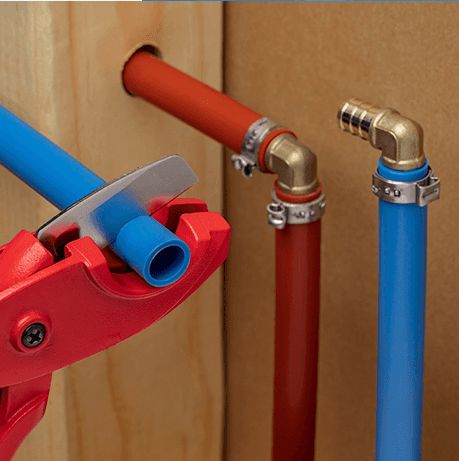
Cross-linked polyethylene tubing, also known as PEX, can freeze. But it is usually more resistant to freezing and bursting due to its flexibility — unlike copper, which can split. Understanding the freeze mechanisms of PEX pipes and how they compare to copper can help you safeguard your plumbing during severe winter weather.
What Happens to PEX When Temperatures Drop?
Water inside pipes can freeze and expand when temperatures stay below 32° Fahrenheit. In unconditioned areas, uninsulated PEX pipes remain vulnerable during prolonged cold snaps. However, the material’s cross-linked molecular structure allows the tubing to stretch outward rather than splitting immediately.
PEX can expand beyond its original diameter when water inside the tubing freezes, which makes it less likely to burst. Once temperatures rise and the ice thaws, the PEX tubing typically contracts back toward its original shape.
Where Freeze Risks Still Exist
While the tubing itself rarely bursts, freezing still creates severe stress points within the plumbing system. These issues are most likely to happen around connection points, during extreme ice formation or after repeated freeze-thaw cycles:
- Fittings and connections: PEX tubing stretches, but rigid fittings and crimp rings connecting lines can still separate or crack under pressure buildup.
- Expansion limits: Extreme or rapid ice formation, especially for uninsulated pipes, can still surpass the material’s expansion limits.
- Repeated freeze-thaw cycles: Testing has shown PEX can tolerate 400-plus freeze-thaw cycles, but that durability is not a substitute for proper insulation and winter protection.
Why Is PEX Pipe More Forgiving Than Copper?
PEX pipe is more forgiving than copper during a freeze, primarily due to its material elasticity and molecular structure.
Copper is a rigid metal with a fixed crystalline structure. When water inside a copper pipe freezes and expands, the copper walls cannot stretch to accommodate the increased volume. The internal hydraulic pressure quickly exceeds the metal’s tensile strength, causing the pipe to split, rupture or blow out entirely at the weakest point.
Best Practices for Cold Weather Protection
While PEX pipes perform well in cold weather compared to copper, they are not completely immune to freezing. Here’s how you can protect your plumbing during severe winter weather:
- Insulation: Cover all exposed PEX pipes located in unconditioned spaces or exterior walls with appropriate foam pipe insulation.
- Heat tape: Install heat tape on vulnerable PEX lines exposed to extreme cold to keep the pipes warm and help prevent freezing.
- Faucet dripping: Let your faucets drip when temperatures drop to keep water moving inside the pipes.
- Plumbing system draining: If you plan to be away from home for an extended period, drain the water lines to prevent ice formation.
Protect Your Home With Broadley’s Plumbing, Heating & Air Conditioning
PEX pipes are great for reducing the risk of freezing or bursting. For long-term seasonal protection, Broadley’s Plumbing, Heating & Air Conditioning offers professional plumbing winterization to prepare your home for South Jersey deep freezes. If you’re already dealing with a frozen line, you can count on our team for emergency response. Call 609-875-2755 or request service online today.